Circe and Patroclus: A Book Review
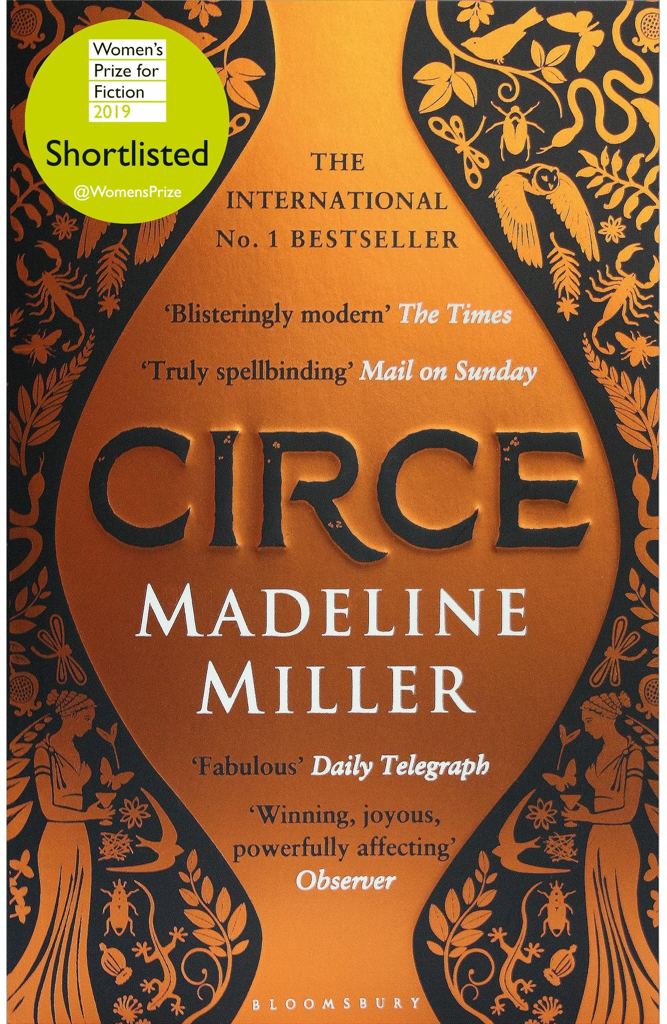
I have recently read the books Circe and The Song of Achilles, written by Madeline Miller. Both books are about unimportant exiles who have empowering stories in their own unique ways.
“That is what exile meant: no one was coming, no one ever would. There was fear in that knowledge, but after my long night of terrors it felt small and inconsequential. The worst of my cowardice had been sweated out. In its place was a giddy spark. I will not be like a bird bred in a cage, I thought, too dull to fly even when the door stands open. I stepped into those woods and my life began.”
— Circe
Madeline Miller is an author who has a background in Classics. She enjoys writing about Greek mythology, but with a twist. Madeline focuses on individuals who are marginalised in society and uses love, emotion, and psychology to give those individuals their voice back.
Circe was a force of nature and a minor goddess. She was the daughter of the sun god Helios and the Oceanid Perse. Circe was hated by her family without reason and was often ostracised by her brothers and sisters. Circe lacked beauty and approval from her family. Circe was a witch, or a sorceress, and her siblings Aeëtes and Pasiphaë were also sorcerers. At the beginning of the book, Circe met a mortal and fell in love. She turned him into a god. The love was not returned, and Circe was again rejected. Circe started to discover her powers and, in a jealous rage, she turned the woman the once-mortal loved (her name was Scylla) into a monster who devoured sailors.
A chain of events occurred after this, and Circe started to understand her powers. She was the only child of Helios who willingly pursued her abilities. She admitted what she did to her father, and he was disgusted. Helios knew he had to confess this to Zeus. After Helios conferred with the King of the Gods, Zeus, he had no choice but to exile Circe to the island of Aiaia. This is where Circe started to discover her true powers and learn her craft.
Patroclus was a prince and the son of Menoetius. Patroclus was not a typical prince; he was weak and seen as useless by others. He was a gentle boy and mostly passive. Patroclus did not know how to fight, nor did he want to learn. His father made several attempts to arrange a marriage for Patroclus, but he was never chosen. In fact, Patroclus went to Sparta to attend Helen of Sparta’s choosing of a husband. This is where Patroclus met the men he would later fight alongside during the war.
Patroclus was minding his own business one day and, while playing dice, he got into a fight with a nobleman’s son and pushed him. The boy fell onto a stone, hit his head, and died. The boy he killed was high-born, and his family went to the king and demanded justice. Therefore, Patroclus was exiled to Phthia, where he met the love of his life, Achilles.
Madeline Miller portrayed the relationship between power and growth differently through Circe and Patroclus. It was clear that Circe wanted power; she wanted to take the power she deserved. Circe worked with what Aiaia provided her. She learned the ways of the land and made Aiaia her home. While Patroclus did not want power, he wanted to be alongside his lover and was content with that. I feel that both characters were going through exile, but Miller portrayed them differently. Circe’s character was written as an isolated woman who suffered through loneliness before transforming into a powerful witch. Whereas, as a reader, I did not feel the same level of sympathy for Patroclus because his journey felt driven by devotion to Achilles.
I inferred that both characters were quiet and unappreciated by the people around them, but over time, they proved others wrong. You do not need to be the loudest person to be powerful. Quietly powerful is a skill and a power in itself.
Both characters were protagonists in their stories. I feel that the expectations placed upon them were different, and their gender played a large part in this. Circe was judged for wanting power and for learning her craft. Her father was ashamed of her for seeking power through witchcraft. She was automatically deemed dangerous and sinful, and she brought shame upon her family. Whereas Patroclus, as a male, was accepted by others. He was never punished for being gentle and was allowed to live his life alongside Achilles. I feel that this is gender expectation at work. Circe wanted power and she was punished. Patroclus declined power and was not treated differently — it was acceptable for him.
It surprised me that Circe had the opportunity to find love, and I believe the lovers she met shaped her and taught her about herself and her boundaries. Many men visited Circe’s island and became part of her routine. The Olympian god Hermes visited Circe often and told her news of the ancient world. He was not someone I trusted, and I felt that he was not good for Circe. He was the son of Zeus, after all. I believe this relationship was important for Circe because it allowed her to feel wanted and connected to another being. However, it was always on Circe’s terms, which I respected. Circe famously slept with the Greek hero Odysseus on his way back from the war, and this affair resulted in the birth of her son.
Love was Patroclus’s identity. It was everything he stood for. He lived for Achilles. Achilles was the centre of his universe, and everything Patroclus did was for Achilles. This included staying on a mountain for years to train, joining a war, and (spoiler alert) dying to protect Achilles’ reputation. It felt like a tragic affair because we never truly got to know Patroclus without Achilles. He was often portrayed as useless, despite showing his true strength toward the end of the novel.
Circe certainly learned her worth as she understood her craft and herself. Sailors with damaged ships would visit her island for food, warmth, and shelter. As soon as they realised she was a lone woman, they would try to take advantage of her. Of course, Circe was always one step ahead of them and often turned the men into pigs. This is how she met Odysseus. Circe turned many of his crew into pigs and made a plea for Odysseus to stay for one year, promising to change them back. We saw Circe’s transformation here; she took on a more traditionally feminine and conforming role compared to her independent self. She always knew Odysseus would leave to return to his wife and son. At this time, Circe was also pregnant with her own child.
Patroclus and Achilles’ love story was tragic and sweet at the same time. We saw Achilles training for war with Patroclus beside him. This training later proved useful for Patroclus, as he helped mend wounded soldiers. Achilles led an army of men to war, determined to return Helen of Sparta to her husband. There was an underlying prophecy that felt like a heavy burden. It was said that once Hector of Troy was killed, Achilles would soon follow. Achilles and Patroclus spent much of their time avoiding Hector for this reason, until Hector killed Patroclus. This led Achilles to seek revenge, even at the cost of his own life. This was the first time we truly saw the depth of Achilles’ love for Patroclus, and the love was reciprocated.
Circe learned what true love was when she had a son. Telegonus was just like his father; he craved more than their small island and longed to explore the world. As he grew older, he began to build a ship to visit Odysseus. Circe made a powerful declaration of love at this point, similar to what Patroclus did to protect Achilles’ reputation. Circe visited a sea creature called Trygon, who possessed a poisonous tail that could kill gods and mortals alike. When she asked for it, Trygon told her the only way to obtain it was by touching it herself, which would result in her death. Circe was prepared to do this for her son’s safety. Moved by her devotion, Trygon gave her the tail without demanding a sacrifice.
Tragedy struck when Telegonus accidentally killed his father using Trygon’s tail. Odysseus’s son Telemachus and his wife Penelope followed Telegonus back to Circe’s island. It was expected that Telemachus would seek revenge, but after witnessing his father’s death, he understood that it was an accident.
Over time, Achilles became increasingly insufferable. He was fame-hungry and desperate for honour during the war. He was brutal and showed no remorse. I feel that Patroclus struggled with this at times, but his love for Achilles outweighed these concerns. When King Agamemnon dishonoured Achilles, he refused to fight. Achilles’ mother appealed to the gods, who then supported the Trojans, leading to many Greek deaths. Despite the danger, Achilles would not return to battle. When the Trojans began burning Greek ships, Patroclus devised a plan to motivate Achilles’ men without breaking Achilles’ oath. Unknowingly, Patroclus was walking toward his own death. Wearing Achilles’ armour, he led the Myrmidons into battle and was killed by Hector. This fulfilled the prophecy and led Achilles to avenge Patroclus by killing Hector.
The endings of both stories were raw and emotional. Circe had to say goodbye to her son, who wanted to explore the world. Achilles and Patroclus were buried together, but only Achilles’ name was inscribed on the tomb, preventing Patroclus from entering the underworld. Circe lost her son to his sense of adventure, while Patroclus lost Achilles and remained trapped between worlds.
Love persisted through all of this, and both characters eventually found peace. Circe fell in love with Telemachus and lived in harmony with her family and Penelope on her island, continuing her witchcraft. Patroclus longed to reunite with Achilles in the underworld and was finally granted peace when Thetis allowed his name to be carved beside Achilles’.
To conclude, I feel that Miller portrayed two very different stories with the same emotional conclusion. Both characters served their worlds at a great cost to themselves. Circe chose herself and her independence, while Patroclus chose love. Both choices were valid, and both characters paid the price.